
Applications · Carbon removal
Carbon that stays out of the air.
Prime 6 biocarbon turns the carbon in hardwood residue into a stable solid instead of letting it return to the atmosphere as the wood decays. That is durable carbon removal, measurable in the fixed carbon and the H:C ratio of the material itself.
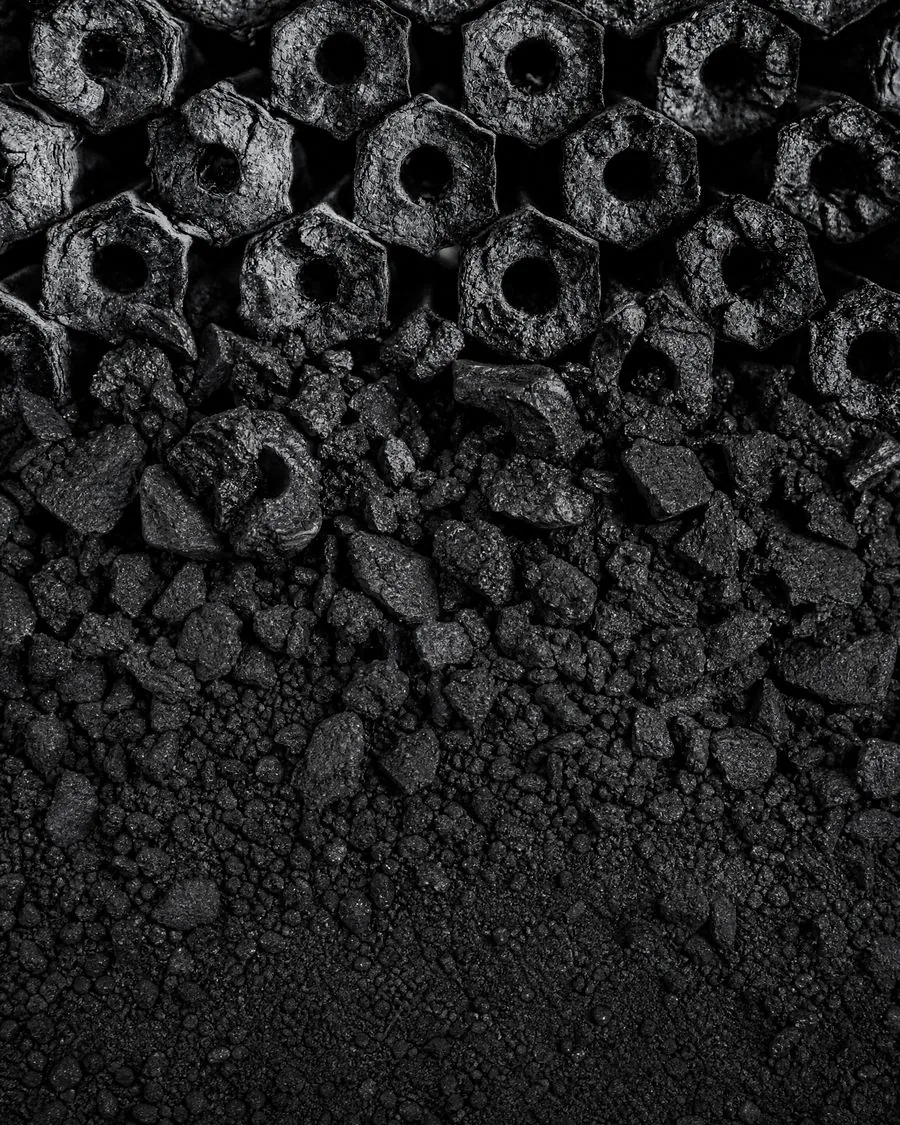
How does Prime 6 biocarbon remove carbon?
A tree takes carbon dioxide from the air and stores the carbon in wood. When residue from a timber mill rots or is burned, that carbon goes back to the air within a few years. Prime 6 carbonizes the residue in closed chambers, so 88 to 92% of the finished material is fixed carbon, the fraction that resists decay. Placed in soil, that carbon stays there.
How permanent is Prime 6 biocarbon?
Carbon removal registries judge the permanence of biochar by its H:C ratio and its fixed carbon: the lower the H:C ratio, the longer the carbon persists.
| Property | Prime 6 value |
|---|---|
| H:C ratio | 0.27 |
| Fixed carbon | 88 to 92% |
| Volatile matter | 5 to 10% |
| Ash | 1.5% |
Is Prime 6 biocarbon credit-eligible?
Prime 6 biocarbon is made for permanent carbon storage, and its fixed carbon and H:C ratio are the measures carbon removal methodologies look at. That makes it a credit-eligible material. Prime 6 supplies the biocarbon and the lab data; project developers and buyers who want to build a removal project on it can contact Prime 6.
Removal or reduction? Prime 6 keeps the two apart.
Carbon used as a reductant in a furnace is consumed. That displaces fossil carbon and is a reduction, not a removal. Carbon placed in soil as biochar is a removal. Prime 6 biocarbon is sold for both, and the same tonne is never counted twice.
Questions carbon buyers ask
Is biochar recognised as durable carbon removal?
Yes. Biochar has its own methodologies for durable carbon removal.
How is the permanence of Prime 6 biocarbon measured?
By its fixed carbon (88 to 92%) and its H:C ratio (0.27), both from third-party lab reports sent with samples.
Where does the carbon end up?
In soil, as biochar. The Agriculture and soil page covers the material for that use.
Talk to Prime 6 about carbon removal
Lab data first, then a conversation with the Prime 6 team.
Contact Prime 6